

The misplaced notion of an imperfect life
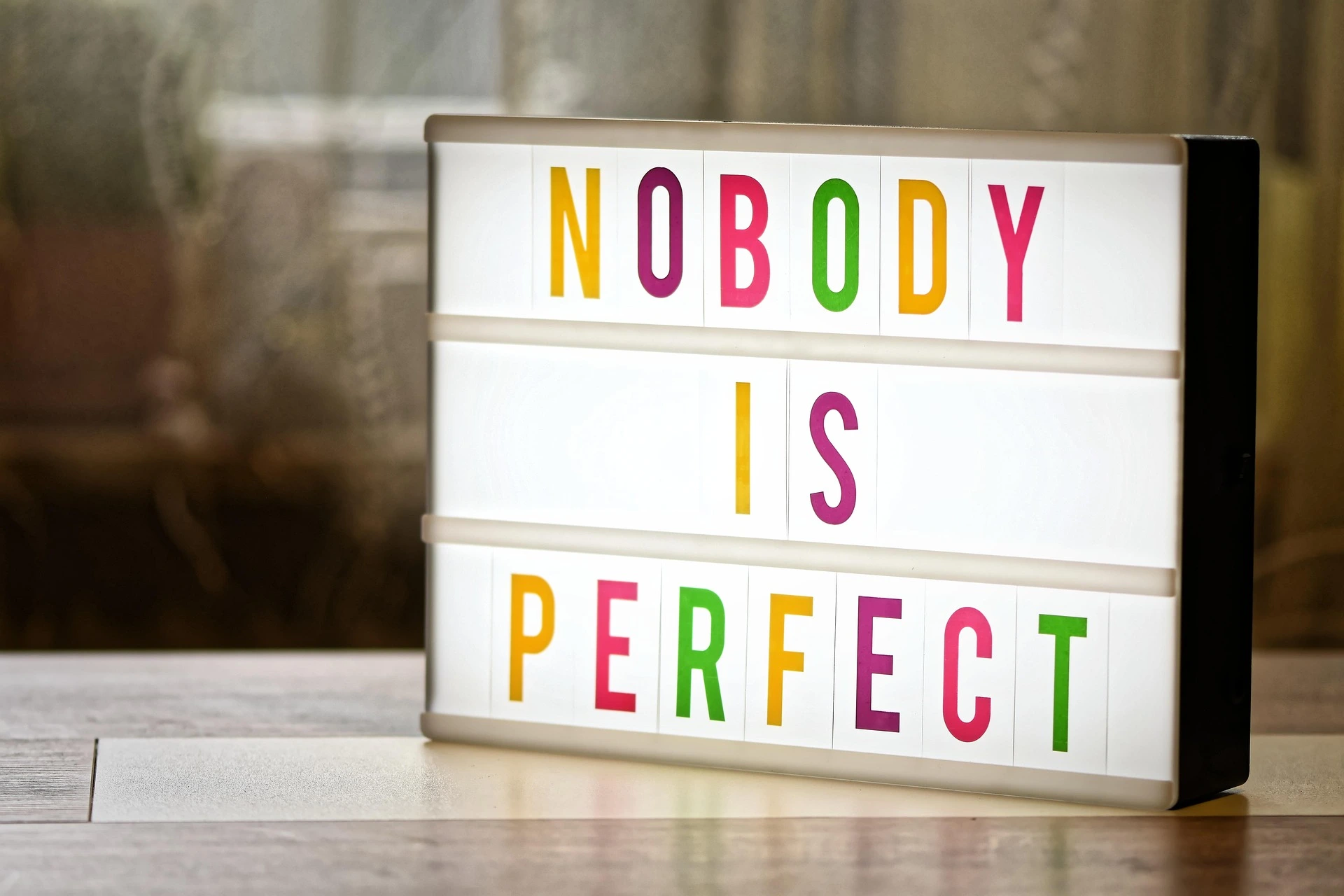
The Misplaced Notion of an Imperfect Life
“We all are perfectly imperfect, and that’s perfectly alright.”
— Muniba Mazari
The Imperfection That Never Was
Many of us were born with healthy bodies and into families where we did not have to struggle for subsistence. Some of us have reasonably healthy relationships, have managed to secure a good-quality education, or have found our feet in this world. At least some of us have had all these boxes ticked.
Even when all our primary needs, in their broadest sense, are fulfilled, we still tend to perceive our lives as imperfect. Throughout our lives, we keep finding one imperfection or another in ourselves.
The human race has evolved from the Stone Age to the Jet Age, yet many of us remain dissatisfied because we feel less than perfect.
The Very Notion Is a First-World Problem
This feeling of imperfection could stem from a toxic relationship, accomplishments that fall short of our expectations, our body shape, unrequited love, an insatiable desire for more, the professional rat race, or sheer comparison.
Interestingly, many of these are first-world problems that have emerged as we have evolved to a stage where we are no longer constantly occupied with making ends meet.
And if that weren’t enough, the seemingly perfect world on our social media feeds leaves us feeling even more imperfect with every swipe.
Our deep-rooted belief in “survival of the fittest” pushes us to hide our imperfections. Some of us end up wearing a mask of perfection, leaving others feeling even more inadequate.
Social media, in particular, is a strange universe where half the world is trying hard to appear perfect, while the remaining half watches in awe or simply tries to make its presence felt.
This phenomenon is not restricted to picture-perfect posts on Facebook or Instagram; it is equally applicable to many posts on platforms such as LinkedIn. Most replies on LinkedIn posts appear to offer validation through hackneyed statements such as “Congratulations,” “Commenting for better reach,” “Onward and Upward,” and “Way to go.”
Of course, all these platforms have genuine value in their own right, beyond doubt.
The Demonstration Effect
One of the most bizarre drivers of feeling imperfect is comparison, which, beyond encouraging healthy competition, is often entirely futile.
All of us have our own unique journeys in this world. We have our own share of joys and sorrows. We look at one happy aspect of another person’s life that he or she chooses to highlight and start feeling inadequate.
If there is one person we genuinely need to compete with, it is the person we were yesterday.
The version of ourselves at the end of today should reflect some amount of progress, no matter how minor or major.
When this perceived image of an imperfect self becomes deeply ingrained, the resulting negative cycle can contribute to depression. Alongside loneliness, a lack of validation from ourselves or others can also affect our emotional well-being.
Who Is Perfect? And for How Long?
One of my teachers used to say:
“No one is perfect. Perfect toh bas Parmatma hai.”
Translation: Only the Divine is perfect.
The irony of feeling imperfect is that the pursuit of perfection never seems to end.
At best, a temporary accomplishment may help us overcome this perception for a while. Soon, however, it can turn into the pressure of staying relevant or appearing relatively more perfect than others. The hunger for perfection is insatiable.
The source of this imagined perfection could be social status, popularity, being perceived as someone who has it all, or something else entirely. Whatever the source, it is a moving goalpost.
Even those few who manage to feel that they have reached this ideal may end up feeling alone or constantly pressured to maintain their supposedly superior position.
The Bright Side
Our imperfections can also push us to stretch our boundaries and accomplish more than we might otherwise have achieved. That is healthy progress.
The problem arises when contentment is mistaken for complacency.
It is important to be content with what we have while continuing to strive for progress. We first need to feel comfortable in our own skin before making a peaceful effort to address some of our imperfections.
Where certain imperfections or limitations are irreversible, we must learn to accept them and succeed despite them.
While many perceived imperfections exist only in our minds, there are countless examples of people overcoming genuine physical challenges and disabilities to become exceptional achievers.
Besides, we should look at those who are better placed than us to draw inspiration, while also remaining aware of those who are less privileged. The former can motivate us to grow, while the latter can help us remain humble and grateful.
In some cases, others may also make us feel inadequate, including, unfortunately, our own parents. It is particularly difficult to ignore such feelings when they come from people close to us, such as a partner or someone we love.
Even then, we must not allow their opinions to trigger persistent self-doubt. It is important to prioritise protecting ourselves and maintaining a healthy sense of self-worth.
So, What’s the Solution?
1. Reflect Without Judging
Review every little moment of your day before going to bed. Do so purely as a witness, without judging yourself. This practice can offer valuable perspectives.
In yogic thought, Anitya Bhawna relates to contemplating impermanence and recognising that life, circumstances, and experiences are constantly changing.
2. Stop Living to Please Others
Stop living solely to please others. Do not lose your peace of mind chasing the image you are trying to build in other people’s eyes.
As the saying goes:
“Sar salamat toh pagdi hazaar.”
Translation: If the head is safe, there will be countless opportunities for turbans or crowns in due course.
The essence is simple: protect what truly matters. Recognition, status, and external validation may come and go, but your well-being should remain a priority.
3. Embrace Your Imperfections
We are all great in our own ways.
Imagine if the different seasons, each uniquely beautiful in its own way, started comparing themselves with one another. The world would be filled with gloom and doom instead of the beauty that comes from their differences.
Our individuality is not a flaw that needs to be corrected. We can acknowledge our limitations, work on what we can change, and still appreciate ourselves as we are.
Conclusion: Recognise Your True Worth
As I always advise:
“If we stop finding value in our life for ourselves, we must introspect how much value it could still have for many others in this world.”
A sincere attempt to reflect on this thought can leave anyone incredibly amazed at how much value their life holds.
The very mirror through which we assess the value we bring to others can also reflect the true worth of our own perfectly imperfect selves.
We do not need to be flawless to be valuable. We do not need to win every comparison to be worthy. We only need to recognise our own worth, embrace our imperfections, and keep moving forward.
After all, the beauty of life lies not in being perfect, but in being perfectly imperfect.